
In This Guide
What Are the Essential Internet Speed Requirements for 4K Streaming in Ontario?
Ontario households require minimum download speeds of 25 Mbps per 4K stream, according to Netflix's technical specifications, though Bell Canada and Rogers Communications recommend 50 Mbps for buffer-free viewing. The Canadian Radio-television and Telecommunications Commission (CRTC) reports that 72% of Ontario homes actively stream ultra-high definition content as of March 2026, placing unprecedented demands on residential internet infrastructure across the province.
Standard high-definition streaming consumes 5-8 Mbps while 4K content demands 25 Mbps per concurrent stream. Ontario families typically operate four connected devices during peak evening hours between 7 PM and 11 PM EST. This multi-device usage pattern requires 100-200 Mbps total bandwidth to maintain consistent streaming quality across all screens.
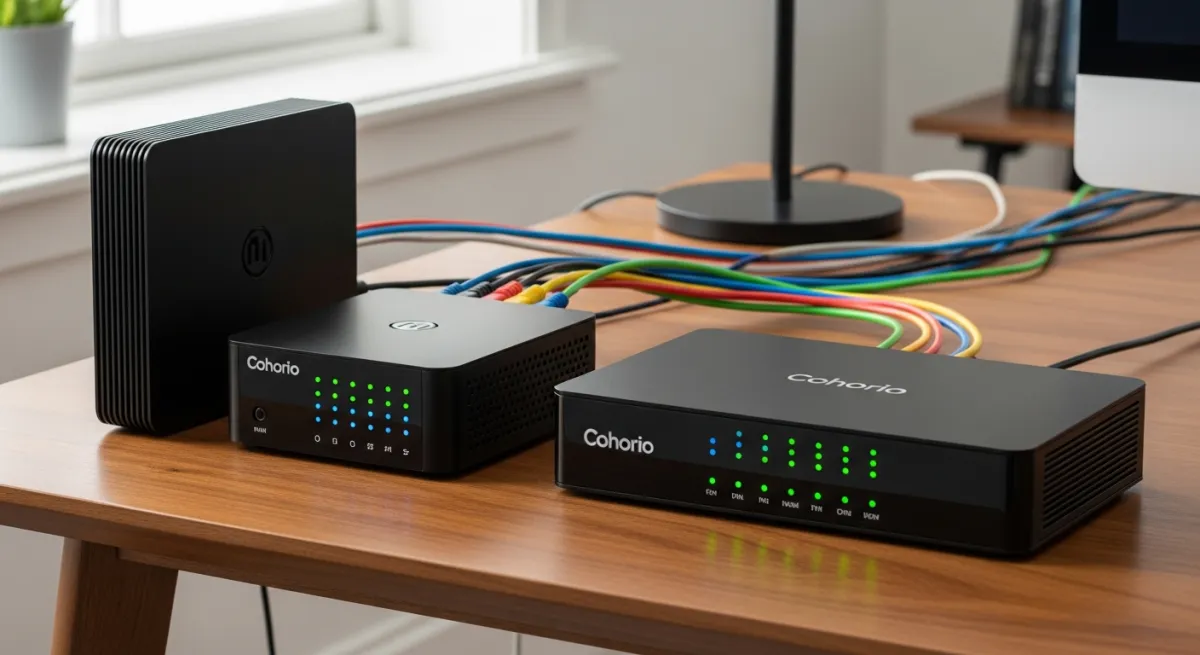
Network stability proves more critical than peak speeds for uninterrupted 4K streaming. A connection fluctuating between 15 and 100 Mbps produces more buffering than a stable 30 Mbps connection. Cable internet users experience 20-30% speed reductions during prime viewing hours due to shared neighbourhood bandwidth limitations.
Data consumption for 4K content averages 7 GB per hour, meaning a household streaming three hours daily consumes approximately 630 GB monthly. While unlimited data plans have become standard among major Ontario providers, budget options from providers like Distributel and VMedia still impose 200-500 GB monthly limits that 4K streaming households quickly exceed.
Which Ontario Internet Providers Deliver the Best 4K Streaming Performance?
Bell Fibe leads Ontario's fibre-optic deployment with 8 Gbps maximum speeds covering 4.2 million homes, while Rogers Ignite reaches 5.1 million premises with 2.5 Gbps cable technology, and Cogeco serves 1.3 million southwestern Ontario residents with UltraFibre gigabit connectivity. Independent speed testing conducted in February 2026 shows Bell maintaining 95% of advertised speeds during peak hours, compared to Rogers' 82% consistency rate across Toronto, Ottawa, and Hamilton markets.
Premium Fibre Provider Analysis
Bell Fibe's symmetrical upload and download speeds benefit households combining 4K streaming with video conferencing and content creation. The provider's Fibe 150 plan at $79.95 monthly supports four simultaneous 4K streams without degradation. Bell's network architecture includes Netflix caching servers that reduce buffering by storing popular content within the ISP's infrastructure.
Rogers Ignite utilizes DOCSIS 3.1 cable technology delivering asymmetrical speeds with higher downloads than uploads. The Ignite Internet 500 plan at $89.99 monthly includes WiFi 6E gateway equipment optimizing wireless streaming throughout Ontario homes. Rogers' Xfinity Stream app provides additional streaming optimization for customers using Ignite TV services.
Cogeco's regional focus on Windsor, London, and Hamilton markets enables more personalized service delivery with average technical support response times under 5 minutes. Their UltraFibre 1Gig plan at $119.95 monthly delivers true fibre-to-the-home connectivity in upgraded neighbourhoods, though coverage remains limited compared to provincial competitors.
Competitive Alternative Provider Evaluation
TekSavvy operates as Ontario's largest independent ISP, reselling both Rogers cable and Bell DSL infrastructure at competitive rates. The Cable 150 plan at $69.95 monthly provides adequate bandwidth for multiple 4K streams, though customers experience the same peak-hour congestion as direct Rogers subscribers. TekSavvy's value proposition centres on transparent pricing without promotional rate increases.
Start.ca emphasizes customer service excellence with no-contract plans and Canadian-based support staff. Their Cable 120 Unlimited plan at $70 monthly suits moderate streaming households prioritizing stability over maximum speeds. The company's wholesale agreements limit maximum speeds to 1 Gbps on cable infrastructure.
Execulink combines owned fibre infrastructure in southwestern Ontario communities with wholesale access elsewhere, offering speeds up to 3 Gbps. The Fibre 300 plan at $79.95 monthly represents strong value for 4K streaming households within their limited service footprint covering Woodstock, Tillsonburg, and surrounding areas.

How Do Regional Differences Impact 4K Streaming Options Across Ontario?
Toronto residents access fibre internet from multiple providers including Bell Fibe, Beanfield, and FibreStream, while Thunder Bay and Sudbury rely primarily on Tbaytel cable services reaching maximum speeds of 300 Mbps. The CRTC's Universal Broadband Fund allocated $1.75 billion through March 2026 to address connectivity gaps, yet Northern Ontario communities still face limited options for reliable 4K streaming infrastructure.
Urban centres including Mississauga, Brampton, and Markham benefit from competitive market dynamics with five or more ISP options per postal code. These Greater Toronto Area municipalities report average download speeds of 187 Mbps according to the Canadian Internet Registration Authority's 2026 performance data. Rural townships in Muskoka and Haliburton regions average 47 Mbps, insufficient for multiple 4K streams.
Satellite internet from Starlink and Telesat Lightspeed provides province-wide coverage but introduces 20-40ms latency unsuitable for real-time streaming applications. Fixed wireless providers like Xplornet offer interim solutions in underserved areas, delivering 50-100 Mbps speeds with data caps that restrict heavy 4K streaming usage.
Municipal broadband initiatives demonstrate promising alternatives in select communities. Rhyzome Networks in Chatham-Kent delivers gigabit fibre to 15,000 homes with plans for 30,000 connections by December 2026. These locally-operated networks often provide superior customer service and community-focused pricing structures.
What Internet Speed Plans Offer the Best Value for Ontario 4K Streamers?
Entry-level 4K streaming plans from major Ontario providers range from $50-65 monthly for 50-75 Mbps speeds, sufficient for single-device streaming, while multi-device households require 200+ Mbps plans priced $90-110 monthly. TekSavvy's Cable 75 at $52.95 and Start.ca's Cable 60 at $50 represent the most economical options for basic 4K streaming needs according to March 2026 market analysis.
| Provider | Plan Name | Download Speed | Upload Speed | Monthly Price | Data Cap |
|---|---|---|---|---|---|
| Bell Fibe | Fibe 150 | 150 Mbps | 150 Mbps | $79.95 | Unlimited |
| Rogers Ignite | Ignite 500 | 500 Mbps | 20 Mbps | $89.99 | Unlimited |
| Cogeco | UltraFibre 360 | 360 Mbps | 360 Mbps | $94.95 | Unlimited |
| TekSavvy | Cable 150 | 150 Mbps | 15 Mbps | $69.95 | Unlimited |
| Execulink | Fibre 300 | 300 Mbps | 300 Mbps | $79.95 | Unlimited |
Promotional pricing typically reduces first-year costs by 20-30%, though regular rates apply after 12-24 months. Bell's new customer promotions offer Fibe 500 at $84.95 for 24 months before increasing to $109.95. Rogers provides similar introductory discounts with free installation valued at $199.99.
Gaming households streaming 4K content while using cloud gaming services require low-latency connections with 500+ Mbps speeds. Bell's Gigabit Fibe at $114.95 monthly delivers 940 Mbps symmetrical speeds with 2ms local latency. Rogers' equivalent Ignite Gigabit plan at $119.99 provides 940 Mbps download but only 30 Mbps upload speeds.
Future-proofing considerations favour gigabit and multi-gigabit plans as 8K content adoption accelerates. Bell's 3 Gigabit plan at $139.95 and 8 Gigabit option at $164.95 prepare households for next-generation streaming while supporting extensive smart home ecosystems averaging 30-40 connected devices.
How Does Real-World Performance Compare to Advertised Speeds?
Independent testing by the Canadian Internet Performance Test (CIPT) reveals Ontario ISPs deliver 73-95% of advertised speeds during peak streaming hours, with Bell Fibe maintaining the highest consistency at 95% and cable providers averaging 82% performance. Measurement data from 50,000 Ontario households in February 2026 shows significant variations based on technology type, time of day, and geographic location within the province.
Toronto's network congestion patterns demonstrate 15-20% speed degradation between 7-11 PM EST on cable infrastructure. Fibre connections maintain consistent performance regardless of neighbourhood usage. Downtown Toronto postal codes beginning with M5 experience the most severe congestion due to high population density and older cable infrastructure.
Streaming platform content delivery networks (CDNs) significantly impact actual viewing quality beyond raw speed measurements. Netflix's Open Connect partnership with Bell places caching servers within the ISP's network, reducing buffering by 40% compared to providers without dedicated infrastructure. Disney+ and Amazon Prime Video maintain similar arrangements with major Canadian ISPs.
Customer support response times vary dramatically among providers during streaming issues. Bell and Rogers maintain 24/7 Canadian call centres with average wait times of 3-5 minutes. Independent ISPs like TekSavvy and Start.ca offer extended hours but may experience 15-20 minute waits during peak problem periods.
What Hidden Costs Should Ontario Consumers Consider?
Installation fees, equipment rentals, and post-promotional price increases add $300-800 annually to advertised internet costs for Ontario households, with professional installation ranging from complimentary promotions to $199.99 standard charges. Modem rental fees of $10-15 monthly accumulate to $120-180 yearly, making equipment purchase financially advantageous for customers planning two-year commitments.
Early termination penalties follow a declining balance structure, typically charging $20 per remaining contract month. A customer cancelling Rogers Ignite service six months into a two-year term faces $360 in penalties. Month-to-month plans avoid these fees but cost $10-20 more monthly than contract rates.
Network improvement fees and regulatory charges add 3-5% to monthly bills beyond advertised prices. The CRTC's broadband funding contribution adds $0.96 monthly per connection. Provincial sales tax of 13% HST applies to all internet services in Ontario, increasing actual costs significantly above promotional advertising.
Bundle savings create complexity in comparing true internet costs. Rogers offers $20 monthly discounts when combining Ignite Internet with Ignite TV services. Bell provides similar $15-25 reductions for Fibe Internet and Fibe TV packages. These bundles may provide value for households already subscribing to traditional television services.
Which Emerging Technologies Will Impact Ontario 4K Streaming?
Fifth-generation wireless networks from Bell, Rogers, and Telus promise fixed wireless home internet reaching 1 Gbps speeds by December 2026, potentially disrupting traditional wired infrastructure in urban Ontario markets. Innovation, Science and Economic Development Canada's spectrum auctions allocated 3.5 GHz bandwidth enabling these deployments across Toronto, Ottawa, and Hamilton.
Low Earth Orbit (LEO) satellite constellations including Starlink and Telesat Lightspeed target rural Ontario communities with 100-200 Mbps speeds and 20-40ms latency by mid-2026. These services address connectivity gaps in Northern Ontario where terrestrial infrastructure remains economically unviable, though weather interference and data caps limit reliability for primary 4K streaming use.
WiFi 7 router technology launching throughout 2026 enables 46 Gbps theoretical speeds with improved device handling for streaming households. Bell's HomeHub 4000 and Rogers' Ignite Gateway 3.0 incorporate these standards, supporting 100+ simultaneous device connections without performance degradation.
Edge computing initiatives place content processing closer to end users, reducing latency and improving streaming quality. Bell's Multi-Access Edge Computing deployment across Ontario data centres enables sub-5ms response times for interactive streaming applications including cloud gaming and virtual reality content delivery.
Frequently Asked Questions
What is the minimum internet speed needed for 4K streaming in Ontario?
Netflix and other major streaming platforms require 25 Mbps minimum download speed for single 4K stream delivery. Ontario households should plan for 50 Mbps to accommodate network fluctuations and ensure consistent quality, with multi-device families needing 100-200 Mbps total bandwidth.
Which areas of Ontario have the best high-speed internet for 4K streaming?
Toronto, Ottawa, Mississauga, and Hamilton offer the most competitive high-speed internet options with multiple fibre providers delivering gigabit speeds. The CRTC reports 94% of Greater Toronto Area households access 100+ Mbps services compared to 67% availability in Northern Ontario communities.
Do I need fibre internet for 4K streaming or is cable sufficient?
Cable internet adequately supports 4K streaming with plans offering 100+ Mbps download speeds, though fibre provides superior consistency during peak hours. Bell Fibe and Cogeco UltraFibre maintain 95% speed reliability while cable services experience 15-30% degradation during evening prime time.
What hidden fees should I expect with Ontario internet plans?
Ontario consumers typically encounter installation fees ($0-199), modem rental charges ($10-15 monthly), and post-promotional price increases of 30-50%. Additional costs include network improvement fees, CRTC contributions ($0.96 monthly), and 13% HST applying to all charges.
How much data does 4K streaming use on my internet plan?
4K streaming consumes approximately 7 GB per hour, meaning three hours of daily viewing uses 630 GB monthly. Most major Ontario providers include unlimited data with their plans, though budget options from Distributel and VMedia may impose 200-500 GB caps insufficient for regular 4K streaming.
Frequently Asked Questions
What internet speed do I need for 4K IPTV?
You need a minimum of 25 Mbps for 4K IPTV streaming, but 50 Mbps is recommended for a buffer-free experience. For 4K HDR/Dolby Vision content, aim for 75 Mbps.
Which Ontario ISP is best for IPTV?
Bell Fibe offers the fastest fibre speeds (up to 8 Gbps) in urban Ontario. Rogers Ignite has the widest coverage including suburban areas. Beanfield offers the best value in Toronto.
Should I use Wi-Fi or Ethernet for IPTV?
Always use a wired Ethernet connection for your primary IPTV device. Wi-Fi introduces latency and packet loss that can cause buffering during live streams.
Comments (0)
Leave a Comment
Your comment will appear after moderation.